How to teach kids padel: a parent's checklist
To teach kids padel as a parent, keep sessions short, spend most of the time on games rather than drills, use a light racket and a slow ball, and praise effort more than results. You don't need to be a coach to give your child a great start. You need a plan, a few safety rules and the discipline to stop before they're bored. Print this checklist and take it to the court.
Before you get on court
- Racket that fits. HEAD suggests about 300 g for under-tens and about 330 g for older juniors. Too heavy or too big and the game gets harder and the injury risk rises. See the best padel rackets for kids.
- Slow balls. Foam or low-compression balls for beginners, as the USPA recommends. Standard balls come later.
- The right length of booking. 30 to 45 minutes for ages 5 to 8, up to an hour from about 9 (Padel Browser). The USPA calls 90 minutes too long for under-12s.
- Water and a hat for outdoor courts.
- Eye protection considered. Ophthalmologists recommend goggles for padel; see padel eye protection.
- Three safety rules agreed before the first ball: nobody hits a ball at anyone, call "mine" before you swing, never run into the glass.
- One goal for the session. Just one: the serve, or letting the ball come off the glass, or volleys.
How to teach kids padel: a 45-minute session plan
This is our suggested shape, built on the principles in the USPA's junior programme guide: lots of hits, little queuing, short feeding blocks, games at the end.
- Warm-up game (5 minutes). Balance the ball on the racket and walk to a line and back, or bounce it up as many times as possible. Movement and smiles, no instruction.
- Mini-rallies (10 minutes). Over the net from the service lines, counting the rally out loud. The USPA uses rallies of three to five shots as the basic unit for beginners. Beat your record.
- Today's one thing (10 minutes). Feed easy balls for the session's goal. The USPA keeps coach feeding to around 10 to 15 minutes and never as the main structure of a beginner session.
- Game time (15 minutes). Target games, first to five, a parent-and-child doubles point. Our padel drills for kids has eight ready-made games.
- Favourite game and one question (5 minutes). Let them choose the last game. Walk off asking "what did you do well today?"
Keeping it fun: the checklist
- They hit, they don't watch. The USPA's line is that children need to be hitting the ball, not watching others hit it. If there are two or three children, rotate fast.
- Simple scores. Rally counts and target points, not adult scoring with deuce and golden point.
- The order of priorities. The USPA puts it as be safe, have fun, learn, in that order.
- Let them win sometimes. Fairly, by playing on your weaker side or giving them two bounces.
- Change the activity before boredom sets in. Ten minutes is a long time to a six-year-old.
- Stop on a high. End with their best rally of the day, not a tearful last game.
What to say, and what to avoid
The NSPCC's advice to sports parents starts with listening: talk regularly with your child about what they want from sport, and expect it to change as they grow. It also asks parents to praise effort and progress as well as performance, help children through difficult emotions, and remember that sport is just one part of their life.
The LTA's parent guide adds a padel-specific angle: because results in tennis and padel are so clear-cut, children often judge themselves harshly. Help them look beyond the score, point out what went well, and ask questions like "what did I do well today?" and "what could I do differently next time?"
"You kept that rally going for twelve." "You let it come off the glass, that's hard." "What was your favourite shot today?" "Want to try that again next time?"
A list of corrections after every point, comparing them with other children, coaching from the side during a match, or a post-mortem of the game on the way home.
The LTA guide also reminds parents that their body language counts: stay calm after mistakes, applaud good rallies on both sides, and accept the result.
Teaching the basics simply
- The grip. Show the "hammer" grip: hold the racket as if knocking a nail in with its edge. Don't fuss if it slips; it will settle.
- The serve. Bounce the ball behind the line and hit it underarm, at or below the waist, diagonally over the net, as the FIP rules require. Turn it into skittles: a cone in the service box to knock over.
- The walls. Keep it playful. The USPA treats wall play for beginners as exploratory, not technical: throw the ball so it bounces into the back glass and let them find where it comes out.
- The net. Volley catch: you throw soft balls, they block them back so you can catch them. No big swing.
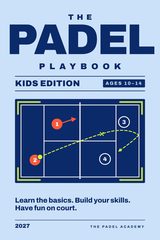
If you'd like structured material to work from, The Padel Playbook: Kids Edition is written for 10 to 14-year-olds and the parents who play with them, and The Padel Playbook: Beginner & Intermediate covers the adult basics you'll be explaining.
When to get a coach
Parent sessions are a great start. Book a coach when you tick two or more of these:
- Your child asks to play more often than you can manage.
- They want to play matches or junior events.
- You can't answer their technique questions, or you notice habits you don't know how to fix, such as a tennis-style grip.
- Sessions with you have started to feel like arguments.
- They'd enjoy playing with children of their own level.
When you look at junior groups, ask how children are grouped: the USPA recommends progression by ability rather than age alone, and Padel Browser suggests asking about the coach-to-player ratio and coaching qualifications. Ask about safeguarding too; the NSPCC's advice is that any concern should go to the club's welfare officer. Our guide to padel lessons explains what coaching costs and how to get the most from it.
Parent-coach traps
- Too long. The session you planned for an hour should probably be forty minutes.
- Too technical. One goal per session, not five corrections per shot.
- Too serious. If you're more upset by a lost game than they are, step back.
- Too much feeding. Feeding baskets is easy for the parent and dull for the child. Rally and play games instead.
- Coaching from the side at events. Leave match days to the child and their coach; your job is to be the calm face behind the glass.
Frequently asked questions
How long should a padel session be for kids?
About 30 to 45 minutes for ages 5 to 8 and up to an hour from around 9. The USPA's junior guide calls 60 minutes standard and 90 minutes too long for under-12s.
Should I coach my own child at padel?
Yes, for the basics and for fun. Keep it short and game-based and praise effort. Hand over to a qualified coach when they want more, want to compete, or sessions with you become tense.
How do I teach a child the padel serve?
Bounce the ball behind the line, hit it underarm at or below waist height, diagonally into the box. Make it a game by putting a cone in the service box as a target.
How do I keep my child interested in padel?
Lots of hitting, little queuing, simple scores, short sessions and games at the end. Let them choose the last game and stop while they're still enjoying it.
What should I say after my child loses?
Start with what went well and ask what they enjoyed. The LTA suggests questions like "what did I do well today?" and "what could I do differently next time?" Save technical feedback for another day.