How long does it take to get good at padel?
The honest answer to "how long does it take to get good at padel?" is that it depends on three things far more than talent: how often you play, whether you get coaching and practise with a purpose, and what you played before. Most people enjoy rallies in their first session; becoming a solid club player usually takes many months of regular play, and reaching the top of a club scale takes years. No study puts exact numbers on it, so below is an honest, rough path by level and what speeds it up.
How long does it take to get good at padel? The short answer
We looked for research that measures how long padel players take to move between levels and didn't find any. Coaching bodies describe padel as quick to start: LTA Padel talks about its accessibility for all abilities and expects beginners to enjoy "a few fun rallies" in a first session. Beyond that, the honest answer is "it depends", and anyone quoting precise weeks per level is guessing.
What we can do is describe the stages most players go through, what unlocks each one, and the factors that make the journey shorter or longer. The timings below are rough typical paths for an adult playing regularly, not research findings.
A rough padel timeline by level
We use the 0–7 style of scale described in our guide to padel levels explained. Your club or app may number things differently.
| Stage (approx. level) | What it looks like | What unlocks the next stage | Rough typical path |
|---|---|---|---|
| First sessions (0–1) | Rallies at gentle pace, an underarm serve, the walls are a mystery | A few basics: grip, short swing, letting the ball bounce | The first few sessions |
| Beginner (1–2) | Rallies more often, plays a full game, avoids the glass | Playing balls off the back glass | The first few months of regular play |
| Developing (2–3) | Uses the back glass sometimes, starts volleying, many unforced errors | Volleying at the net and lobbing to get there | Often the first year |
| Solid club player (3–4) | Uses the walls regularly, moves with a partner, knows attack from defence | A reliable bandeja; fewer errors under pressure | Commonly one to a few years |
| Advanced (4–5+) | Reads opponents, adapts during matches, controls pace and depth | Structured training, competition, physical preparation | Several years for most adults |
| Top of the scale (6–7) | Ranked competition players | Years of high-volume training, usually from youth | Out of reach for most adult starters |
For context on the far end: research on expertise, starting with Ericsson and colleagues' 1993 study of violinists, links expert performance to many years of dedicated practice. A 2019 replication found the best and good violinists in its sample had each practised alone for roughly 8,000 to 10,000 hours by age 18, and questioned how much practice alone explains the difference between them. Either way, nobody reaches the top quickly.
How long does it take to learn padel?
Learning to play, meaning keeping a rally going, serving legally and enjoying a game of doubles, happens fast. That is one of padel's big attractions. The serve is underarm, the court is small and the walls keep the ball in play. Our guide to your first time playing padel covers what to expect.
Learning to play well is a different question. The skills that separate levels, such as the back glass, the volley, the lob and the bandeja, each take months of regular practice to become reliable under pressure.
How often should I play to improve?
More often beats longer. Two or three sessions a week will move you along much faster than one long session, and gives your body time to adapt. The Padel School suggests that two or three focused sessions a week can help if you train with intent, and stresses that consistency matters more than volume.
If you can only play once a week, you will still improve, just more slowly. Make that session count: a short drill block before the match, one skill at a time.
Lessons, matches or drills: what works best?
| Type | What it does | Use it for |
|---|---|---|
| Lessons | Fixes technique and builds fundamentals | Early on, and whenever you stall |
| Drills | Gives you repetitions of one skill | Turning a lesson into a habit |
| Matches | Tests your skills under pressure | Showing you what to work on next |
The Padel School's summary is simple: training builds skills, matches test them. Its coaches also warn that players who skip early coaching often reach the top of their club, then stall because the fundamentals were never built, and those habits get harder to change later. A few lessons early on save months. Our guide to padel lessons explains what to look for in a coach.
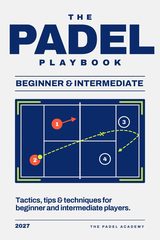
A balanced week for a keen beginner might be one lesson or drill session and one or two matches. The Padel Drill Book has 100 drills graded by level for that practice session, and The Padel Playbook: Beginner & Intermediate covers grips, the walls, the serve and positioning with court diagrams.
Does coming from tennis or squash make it faster?
Usually, at first. Both sports give you racket skills and movement, but each brings habits to unlearn.
From tennis
The Padel School lists confidence at the net, strong volleys, a natural smash and reliable groundstrokes as the advantages tennis players bring. The habits to change are a power-first mindset (padel rewards patience), avoiding the glass instead of using it, and treating every lob as a smash rather than choosing between the bandeja, víbora and other overheads. See tennis habits that hurt your padel.
From squash
Squash players already read balls off walls and usually arrive with a continental-style grip. The adjustments are that the ball must bounce on the opponents' floor before touching their walls, and that wristy, swinging strokes need to become shorter and firmer. Our padel vs squash guide covers the switch in detail.
From no racket sport
You have fewer habits to break, which is a real advantage if you get good coaching early. Expect the first stage to take a little longer, then progress at the same pace as everyone else.
What slows players down
- Only playing matches. Few repetitions of any single shot.
- Always the same three people. You learn their habits, not padel.
- No feedback. Without video, a coach or numbers, you can't tell what to fix.
- Avoiding the glass. It's the skill that moves most beginners up a level.
- Too much, too soon. Injuries from a sudden jump in playing time cost weeks.
If you recognise these, read why am I not improving at padel? for a self-test and a four-week plan.
How do I know I'm getting better?
Ratings help but can mislead: on Playtomic, only competitive matches change your level, and new players' levels swing a lot while the system learns their game. Better measures are the ones you control: unforced errors per set, how many balls off the back glass you return, how often you and your partner reach the net after a lob. If those numbers improve over a couple of months, you are getting good at padel, whatever the app says.
Frequently asked questions
How long does it take to learn padel?
Most people can rally and play a basic game within their first few sessions. Learning to play well, with the walls, volleys, lobs and overheads, takes many months of regular play.
How long does it take to become an intermediate padel player?
There's no research that sets a timeline. As a rough guide, players who play two or three times a week and take some lessons often reach a solid club level in one to a few years. Less frequent play takes longer.
Is padel easier to learn than tennis?
It is quicker to start: the underarm serve, small court and walls keep rallies going. Playing it well is still hard, and tennis players have to unlearn some habits, such as relying on power.
How many times a week should I play padel to improve?
Two or three sessions a week, including at least one focused practice or lesson, is a good target. Consistency matters more than long, occasional sessions.
Can adults get good at padel if they start late?
Yes. Many club players started as adults. The top of the scale is usually reserved for ranked competitors who trained for years, but a solid club level is realistic with regular play and some coaching.
Sources
- LTA Padel: what to expect from your first padel session
- The Padel School: the power of repetition
- The Padel School: how advanced players can avoid the improvement plateau
- The Padel School: the transition from tennis to padel
- Playtomic: how the Playtomic level system works
- Macnamara & Maitra (2019), Royal Society Open Science: revisiting Ericsson, Krampe & Tesch-Römer (1993)