Hip flexor pain from padel
Pain at the front of the hip, where the thigh meets the body, often after a sprint to the net or a lunge for a wide ball, is commonly a hip flexor strain. Most are mild and settle with sensible care. The trick is to rest it enough to heal without letting the hip stiffen.
This guide explains common patterns in plain language. It can't diagnose you. If the pain is severe, came from a fall or twist, or isn't settling, get it assessed.
What the hip flexors do
The hip flexors are a group of muscles at the front of the hip that lift your knee towards your body. MedlinePlus, the US National Library of Medicine's health service, describes a hip flexor strain as one of these muscles being stretched or torn, usually by sudden movements such as sprinting, kicking or changing direction. Padel's short sprints, lunges and recoveries fit that description well. MedlinePlus lists weak muscles, stiff muscles and not warming up among the contributing factors.
How it feels
| Severity | What you notice |
|---|---|
| Mild | Pain and pulling at the front of the hip |
| Moderate | Cramping, sharp pain, a limp, trouble getting out of a chair, up from a squat or up stairs |
| Severe | Severe pain, spasm, bruising and swelling, a bulge at the top of the thigh, hard to walk: possible complete tear |
A severe strain needs medical assessment. Front-of-hip pain can also come from the joint itself or be referred from elsewhere, so if it doesn't fit the pattern above, get it checked.
The first days
MedlinePlus advises stopping any activity that causes pain, gentle stretching to extend the hip, and ice wrapped in a cloth for 20 minutes every three to four hours for two to three days. Exercise that doesn't strain the hip flexors, such as swimming, can keep you fit while it heals.
Rebuilding
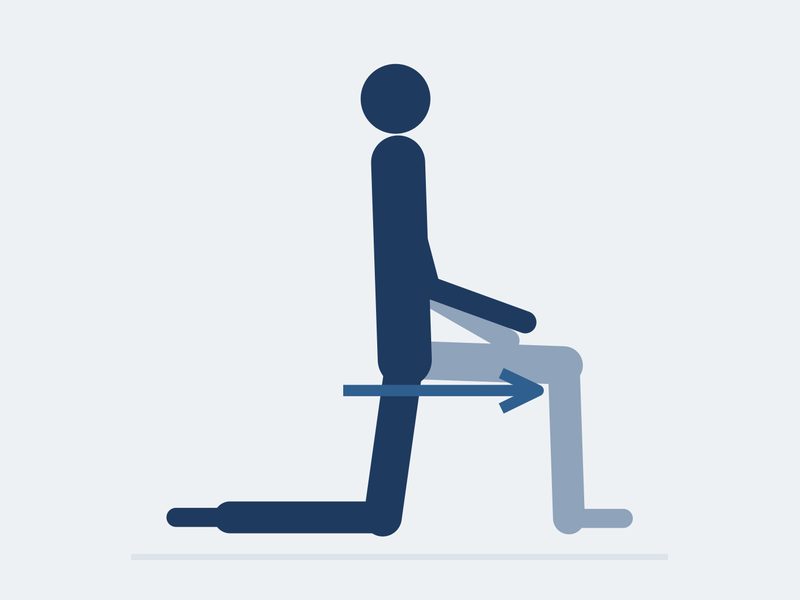
- Gentle range: the half-kneeling hip flexor stretch, a mild pull and no pain, 2 × 30 s.
- Hip and trunk strength: glute bridges and dead bugs, which also train the hip flexors under control.
- Lunge patterns: reverse lunges, then split squats.
- Speed: marching, skipping, then short accelerations and split steps.
MedlinePlus says a physical therapist will typically stretch and strengthen the hip flexors and the surrounding muscles and rebuild strength around the hip and back. Our hip exercise plan covers the strength side.
Back to padel
Return once you can walk, climb stairs, lunge and sprint briefly without pain. Start with drills, then a short match. Warm up properly every time: the Aspetar review of padel injuries lists inadequate warm-up among padel's injury risk factors. MedlinePlus advises contacting a doctor if you don't feel better within a few weeks of treatment.
NHS advice is to call 999 or go to A&E if you have severe hip pain after a fall or injury, can't walk or put weight on the leg, or have tingling or loss of feeling in the hip or leg after an injury. Ask for an urgent GP appointment or contact NHS 111 if severe pain started suddenly without an injury, the hip is swollen and hot, the skin around it has changed colour, or you feel unwell with a high temperature. See a GP if the pain hasn't improved after two weeks of self-care, keeps coming back, affects your sleep or daily life, or you have hip stiffness for more than 30 minutes after waking.
Frequently asked questions
What does a hip flexor strain feel like?
Pain and pulling at the front of the hip where the thigh meets the body, often worse lifting the knee, climbing stairs or getting up from a squat.
How do you strain a hip flexor in padel?
Usually with a sudden sprint, lunge or change of direction, especially without a proper warm-up.
How long does a hip flexor strain take to heal?
Mild strains often settle within a few weeks. If you don't feel better within a few weeks of treatment, see a doctor.
Should I stretch a strained hip flexor?
Gentle stretching to extend the hip can help; keep it to a mild pull, never pain.
When is hip flexor pain serious?
Severe pain with bruising, swelling or a bulge and difficulty walking can mean a complete tear and needs assessment.