Back pain from smashing in padel
If your back is fine until you start smashing, the overhead is doing it. Arching back to reach a high ball and then snapping forward is a big load on the lower spine, and the kick smash adds a hard twist. You don't have to give up overheads, but you do have to change how many you hit and how.
This guide explains common patterns in plain language. It can't diagnose you. If the pain is severe, came from a fall or twist, or isn't settling, get it assessed.
Why smashes load the spine
The Aspetar review of padel injuries names jumping, rotation and extension, and smashes in particular, as the main sources of load on the spine, and singles out the topspin kick smash. The same review notes trunk problems are more common in padel than in tennis, which fits a sport with more overheads on a smaller court. Across the studies in a 2023 systematic review, the lower back accounted for roughly 9% to 28% of padel injuries.
Where the back gets caught out
| Habit | Why it hurts | Change |
|---|---|---|
| Ball behind your head | You arch the lower back to reach it | Move your feet back first so contact is in front |
| Facing the net | No hip and shoulder turn, so the lower back twists | Turn side-on early |
| Kick smash on every lob | Maximum arch, twist and jump, over and over | Save it for genuinely short lobs |
| Stiff hips and upper back | The lower back makes up the missing range | Hip flexor and upper-back mobility |
| Cold back | Fast extension before the trunk is ready | Warm up with trunk rotations and practice overheads |
The bandeja is your friend
Most lobs don't need a smash. LTA Padel teaches the bandeja side-on with the ball dropping to about eye height and a swing across the body that takes pace off the ball, and The Padel School stresses an early turn and contact in front. That shape asks much less of the lower back than a full arch and snap. Use it to keep the net, and save the smash for easy balls.
Build an overhead-proof back
- Half-kneeling hip flexor stretch: hip extension range, so you reach up without arching the lower back.
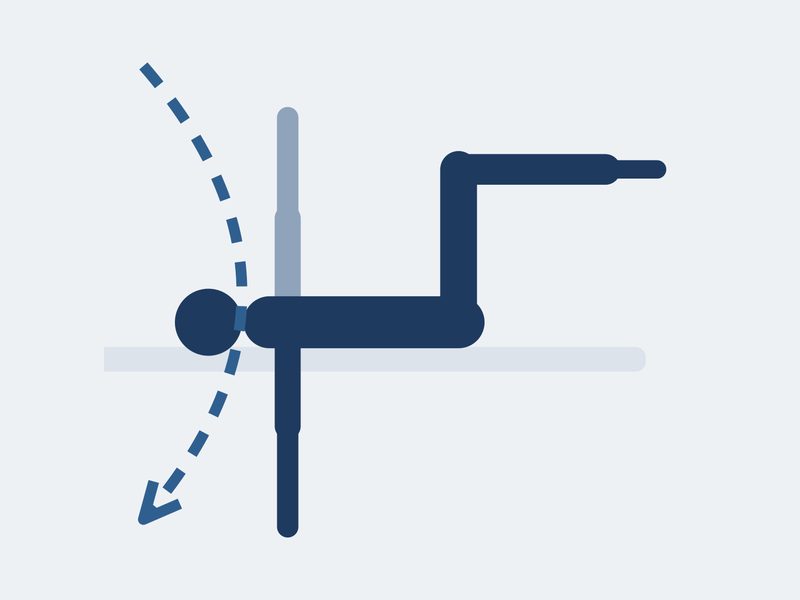
- Open book: upper-back rotation for the turn.
- Dead bug and front plank: control against arching.
- Pallof press and rotational medicine-ball throw: turning through the hips, then producing power safely.
The full progression is in our 6-week back plan.
Smashing with a sore back
NHS inform advises keeping active with back pain. On court that means bandejas instead of smashes and no kick smashes until your back is quiet, then bringing them back a few at a time. See can I play padel with back pain? for a simple rule.
Contact your GP if your back pain is persistent and unchanging despite self-care, if movement doesn't affect the pain, or if it's worse at night. NHS inform describes cauda equina syndrome as rare but serious. Call 111 (or your local emergency number) if you have back pain with any of these:
- numbness or pins and needles between the inner thighs or genitals, or around the back passage or buttocks
- new difficulty starting or stopping urination, or leaking urine
- loss of bladder or bowel control, or loss of sensation when you go to the toilet
- changes in erection, ejaculation or genital sensation
- significant trauma, such as a fall from height, in the last seven days
Frequently asked questions
Why does my back hurt when I smash in padel?
Smashes combine arching back, snapping forward and often twisting and jumping, which loads the lower spine, especially when the ball is behind your head.
Is the kick smash bad for your back?
It's one of the most demanding shots for the spine; the Aspetar review singles it out. Save it for short lobs, and leave it out while your back is sore.
How can I smash without back pain?
Get your feet back so contact is in front, turn side-on early, use the bandeja for most lobs, and train hip and upper-back mobility and trunk control.
What exercises help back pain from smashing?
Hip flexor stretches, open books, dead bugs, planks, Pallof presses and, later, rotational medicine-ball throws.
Should I stop smashing with back pain?
Swap smashes for bandejas while it settles, then bring them back gradually, kick smash last.
Sources
- Eirale and de Gasperis (2023): Injuries in padel, Aspetar Sports Medicine Journal
- Dahmen et al. (2023): incidence, prevalence and nature of injuries in padel, a systematic review (BMJ Open Sport & Exercise Medicine)
- LTA Padel: overheads, the bandeja and the smash
- The Padel School: the bandeja from scratch
- NHS inform: back problems, self-management advice