Your first padel tournament: what to expect, answered
At your first padel tournament, expect a short warm-up, matches that start on time, a scoring format you agreed to on entry, and nerves that settle after the first few games. The biggest decisions happen before the day: entering the right category, knowing the format and refreshing a handful of rules. Here are straight answers to the questions first-timers ask most.
What should I expect at my first padel tournament?
A busier, more structured version of a club match. You will check in, find your court on a draw sheet or app, warm up briefly with your opponents and play to a set format, usually with a clock in the background. Between matches there may be waiting, so the day can be long.
Most first-timers are surprised by two things: how quickly the match starts, and how normal it feels after a few games. LTA Padel describes its competitions as catering for all abilities and age groups, so you will not be the only newcomer.
Which category should I enter?
Enter the category that matches how you actually play in matches, not your best day in practice. Read the organiser's definitions carefully, because categories vary:
- Letter categories usually run from D (lowest) up to A or Open.
- Spanish-style numbered categories often run the other way: a lower number means a better player.
- Rating-based events use a level from an app or federation scale.
If you are between two categories for your first event, pick the lower one: you will play more matches, learn more and enjoy it more. Our guide to padel levels compares the main scales. If you use Playtomic, remember that only competitive matches move your level, so your rating may lag behind your real game if you mostly play friendlies.
What format will we play?
Check the entry details; it changes everything about the day:
| Format | What it means for you |
|---|---|
| Americano or mexicano | Social; partners rotate, every point counts, nobody is knocked out |
| Round robin groups | Several guaranteed matches against other pairs in your group |
| Knockout | Lose and you're out, unless there's a consolation draw |
| Groups then knockout | Common for weekend events; group results decide who goes through |
Our guide to padel tournament formats explains each one in detail. If your first event is a straight knockout, ask whether there's a consolation or plate draw, so a tough first-round draw doesn't end your day after one match.
How long are the matches?
It depends on the event. The FIP rules allow a full best-of-three-sets match, but also shorter options such as a 4-game set, a 7-point match tie-break and a 10-point super tie-break (Rule 1). Club tournaments often use these to fit the schedule, so check before you start, along with the scoring at deuce.
Which rules should I refresh before the day?
You know how to play. These are the competition rules that catch new players out, all from FIP Rule 1 and Rule 2:
| Rule | What it says |
|---|---|
| Warm-up | A 3-minute courtesy rally on court before play. That is not enough to warm up your body; do that beforehand |
| Between points | A maximum of 20 seconds, with no eating or drinking |
| Change of ends | Up to 90 seconds, except after the first game of a set, when there is no rest |
| Between sets | Up to 120 seconds |
| Deuce | Advantage, golden point or Star Point, as set by the organiser. On golden point, the receiving pair chooses who receives |
| Late arrival | A pair not ready 10 minutes after the scheduled start can lose by walkover |
The organiser's own regulations can vary some of these, so read them. Our guides to golden point and padel match times and warm-up have the detail.
What should I bring?
The Padel School's pre-tournament advice is to pack early: a main racket and a backup, wristband, headband, towel, spare overgrips, balls if needed, extra socks, and shoes you have checked. Add water, food for between matches and a layer for waiting around. Our padel bag checklist has a printable list.
How do I warm up properly?
Do your own warm-up off court before the match, because three minutes of courtesy rally won't prepare your body for lunges and overheads. Fifteen to twenty minutes of light movement, mobility and padel-specific moves works well, followed by some easy hitting if a court is free. Our padel warm-up guide has a routine.
What if there's no umpire on our court?
At many amateur events you may play without an umpire. If so, agree the score out loud after each point, make honest calls on your own side, and if there's a dispute you can't settle, replay the point or ask the tournament desk. Good manners make the day better for everyone; see our guide to padel etiquette.
How do I deal with first-tournament nerves?
Expect them. The Padel School's advice is to arrive early, avoid a late night and a busy morning, and remember that excitement is fine as long as it stays in check: consistency needs a calm approach. Give yourself a between-point routine, agree a simple first-game plan with your partner and judge the day on that plan, not the result. Our padel mental game guide has nine habits that help.
What should we agree as a pair beforehand?
- Who plays which side, and who takes the middle and lobs down the centre.
- Your calls and serve signals.
- Who receives on golden point.
- One or two patterns, such as "lob when both are at the net".
- How you will talk after errors: information, not blame.
How should we prepare in the weeks before?
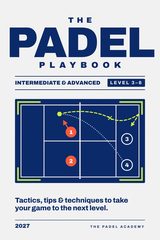
Play some competitive matches against unfamiliar pairs, practise under a score, and rehearse your serve and return, which start every point. The Padel Drill Book has drills for the serve, the return and scoring games you can play as a four, and The Padel Playbook: Intermediate & Advanced covers the match tactics that decide close games. On the day itself, follow our padel match day routine.
What if we lose in the first round?
Losing early is part of tournament padel. Watch the next round for half an hour, note one thing that cost you points, and enter another event. The second tournament is always easier than the first.
Frequently asked questions
How long is the warm-up in a padel tournament?
Under FIP Rule 2, the on-court courtesy rally is 3 minutes. Organisers can vary their own rules, so check, and do your physical warm-up before you go on court.
Which category should I enter for my first padel tournament?
The one that matches your real match level. If you are between two categories, enter the lower one for your first event, and read the organiser's definitions, because scales vary.
Do padel tournaments use golden point?
Many club and league events do, but the organiser decides. The FIP rules allow advantage, golden point or Star Point, so check the scoring before your first match.
What should I bring to a padel tournament?
Two rackets, spare overgrips, a towel, extra socks, checked shoes, water, food for between matches and a warm layer for waiting around.
How many matches will I play in a padel tournament?
It depends on the format. Americanos and round robin groups guarantee several matches; a straight knockout can be one, unless there's a consolation draw.