Achilles pain from padel: tendinopathy explained
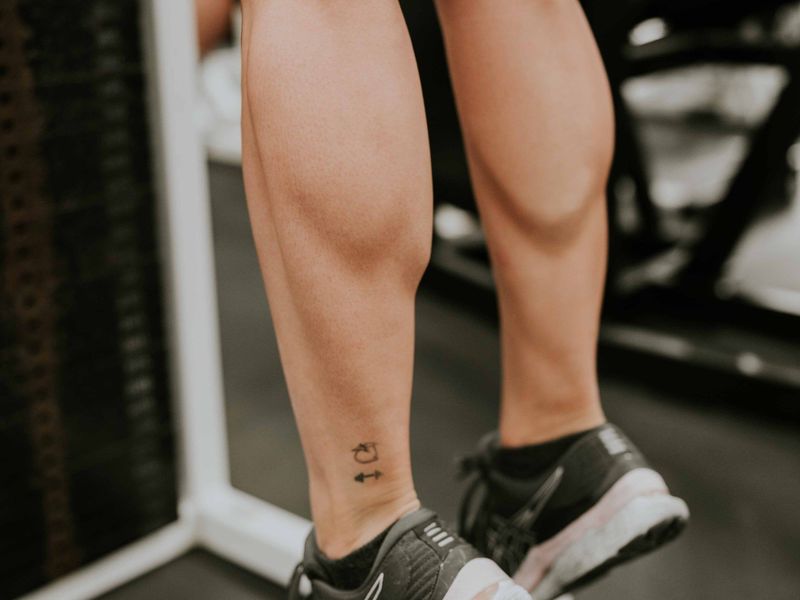
If the back of your heel is stiff for the first few steps every morning and sore after padel, but loosens up once you get going, the likely culprit is Achilles tendinopathy. It isn't a tear and it isn't inflammation you can rest away. It's a tendon that has been asked to do more than it's ready for, and the fix is to make it stronger.
This guide explains common patterns in plain language. It can't diagnose you. If the pain is severe, came from a fall or twist, or isn't settling, get it assessed.
What Achilles tendinopathy is
The Achilles tendon joins your calf muscles to your heel, and you load it every time you push off. Berkshire Healthcare NHS Foundation Trust's physiotherapy advice describes tendinopathy as a tendon that is irritated because it isn't coping with the load placed on it, leading to small repeated injuries that don't fully heal. Patient.info, a professional medical reference, notes the common form is tender about 2 to 6 cm above the heel.
The typical signs
- Morning stiffness that eases after a few minutes of walking.
- Tenderness when you squeeze the tendon, sometimes with swelling or a slight creak.
- Pain that warms up: it settles during padel and comes back afterwards, or the next morning.
That last pattern is the trap. Because the tendon feels fine once you're warm, it's easy to keep adding sessions until it won't settle at all.
Why padel players get it
Padel is constant push-off: split steps, short sprints to the net, quick recoveries. In a 2025 survey of 645 French players (Lecler and colleagues), the calf and Achilles tendon together were the most commonly injured area. The Berkshire NHS advice lists risk factors including being over 30, being male, a higher body weight, tight or weak calves, old or unsupportive footwear and sudden increases in training. "I started playing four times a week" is the classic padel version.
The fix: heel raises, built up over months
The same NHS physiotherapy advice calls a strengthening programme the "gold standard" treatment and warns that significant improvement can take several months. Its starting exercises are simple:
| Stage | Exercise | Dose |
|---|---|---|
| 1 | Two-leg heel raise, knees straight, slow lowering | 10–20 reps, twice a day |
| 2 | Single-leg heel raise, holding a chair | 10–20 reps, twice a day |
| 3 | Add the bent-knee calf raise, then a weighted backpack | 3 × 10–15, every other day |
| 4 | Skipping, pogo hops, split-step hops | Short sets, only when stage 3 is comfortable |
The exercises may be uncomfortable but shouldn't significantly increase your symptoms. Our calf raise plan takes it further.
Can you keep playing?
Often, yes, if the pain stays mild and settles by the next morning. Cut the number of sessions rather than stopping completely, avoid hard back-to-back days, and check your shoes aren't worn out. The NHS advice also suggests ice in a damp towel for 15 minutes three times a day, painkillers if suitable, low-impact exercise such as swimming or cycling, and trying heel raises in your shoes to offload the tendon. If the exercises make it worse, ease off and see your GP or a physiotherapist.
Stop and get same-day help if you suspect an Achilles rupture: a feeling of being kicked in the back of the leg, a pop or snap, and difficulty pushing off or standing on tiptoe on that side. NHS 111 Wales says to go to A&E or call 999 after an injury if you heard a crack, the leg has changed shape, the area is numb or tingling, or the skin is blue, grey or cold. Don't drive yourself.
Frequently asked questions
What is Achilles tendinopathy?
A tendon that isn't coping with the load placed on it, causing pain, stiffness and tenderness, usually a few centimetres above the heel.
Why does my Achilles hurt after padel?
Padel's constant push-offs load the tendon heavily. Sudden increases in sessions, weak calves and worn shoes are common triggers.
Can I play padel with Achilles tendinopathy?
Often, if pain stays mild during play and settles by the next morning. Reduce sessions rather than stopping, and do heel-raise exercises.
How long does Achilles tendinopathy take to heal?
NHS physiotherapy advice says a strengthening programme can take several months to bring significant improvement.
Should I rest a sore Achilles completely?
Not usually. Strengthening is the main treatment; keep fitness with low-impact exercise and cut back the activities that flare it.
Sources
- Berkshire Healthcare NHS Foundation Trust: physiotherapy advice for Achilles tendinopathy
- Patient.info (professional reference): Achilles tendinopathy and rupture
- Lecler et al. (2025): risk factors for padel injuries, a cross-sectional study of 645 French players (Journal de Traumatologie du Sport)
- Eirale and de Gasperis (2023): Injuries in padel, Aspetar Sports Medicine Journal
- NHS 111 Wales: sprains and strains