Padel calf exercises: a calf raise plan
Your calves take a hit on every split step, sprint and stop. That's why the calf and Achilles together were the most injured area in a 2025 survey of 645 padel players. The good news is that calves respond quickly to training, and a few minutes of calf raises two or three times a week is about the best-value injury prevention in padel.
This guide explains common patterns in plain language. It can't diagnose you. If the pain is severe, came from a fall or twist, or isn't settling, get it assessed.
Why calves matter in padel
In the French survey by Lecler and colleagues (2025), the calf and Achilles tendon complex made up 18.8% of injuries, just ahead of the elbow, and players over 40 had about four times the odds of injury. The Aspetar review of padel injuries says "tennis leg", a tear in the calf muscle, is most common in poorly conditioned men over 40. More broadly, a 2014 meta-analysis of 25 trials (Lauersen and colleagues) found strength training cut sports injuries to less than a third.
Straight knee and bent knee: you need both
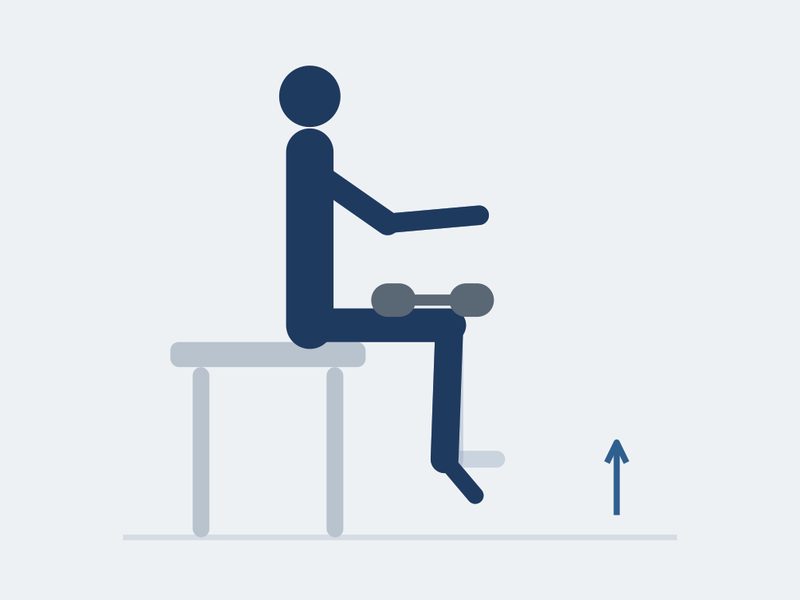
The calf has two main muscles. The gastrocnemius crosses the knee and does most of the work with the knee straight; the soleus sits underneath and works more when the knee is bent. A 2023 study (Kinoshita and colleagues) found standing calf raises grew the gastrocnemius substantially while seated raises barely changed it, with the soleus responding similarly to both. Padel uses both positions, so train both: the straight-knee calf raise and the bent-knee calf raise.
Test yourself first
Stand on one leg, fingertips on a wall, and rise onto your toes and back down at a steady one-second-up, one-second-down pace until you can't keep the height or the rhythm. In a 2025 study of the general population (Sleeswijk Visser and colleagues), the median was about 25 single-leg raises, using a 10° incline and a metronome, so a flat-floor result is only a ballpark. More useful: compare your two legs, and retest every few weeks.
The plan
| Weeks | 2–3 times a week |
|---|---|
| 1–2 | Two-leg calf raise, straight knees, 3 × 15, three-second lowering · Two-leg bent-knee raise 3 × 15 |
| 3–4 | Single-leg calf raise on the floor 3 × 10–12 each · Single-leg bent-knee raise 3 × 10–12 each |
| 5–6 | Single-leg raise off a step, lowering below step height 3 × 10–12 · Bent-knee raise holding a weight 3 × 10 |
| 7–8 | Weighted single-leg raises 3 × 8–10 · Skipping and pogo hops 3 × 20 s · Split-step hops 3 × 20 s |
Move on when a stage feels easy and your calves aren't sore the next day. Hops come last, and only once single-leg raises are strong and pain-free. In the free workout builder, the "Calf & Achilles" set builds a PDF with the dose for your level.
Before you play
Calves are where a cold start shows up first, and the Aspetar review lists inadequate warm-up among padel's injury risk factors. Jog and skip for a few minutes, then ten calf raises, some ankle bounces and a few split steps and short accelerations before your first sprint. If your calf or Achilles is already sore, read Achilles pain from padel or calf strain in padel first.
Frequently asked questions
What are the best calf exercises for padel?
Straight-knee and bent-knee calf raises, progressing to single-leg, off a step and with weight, then skipping and pogo hops.
How often should padel players train calves?
Two or three times a week is enough for most players.
Why do I need both straight and bent-knee calf raises?
The gastrocnemius works mainly with the knee straight, the soleus more with the knee bent. Padel loads both.
How many single-leg calf raises should I manage?
In a 2025 study of the general population the median was about 25 on a 10° incline at a set pace. Compare your legs and retest rather than chasing a number.
Do calf exercises prevent calf strains in padel?
No exercise guarantees it, but strength training substantially reduces sports injuries overall, and calves are padel's most injured area.
Sources
- Lecler et al. (2025): risk factors for padel injuries, a cross-sectional study of 645 French players (Journal de Traumatologie du Sport)
- Eirale and de Gasperis (2023): Injuries in padel, Aspetar Sports Medicine Journal
- Lauersen et al. (2014): the effectiveness of exercise interventions to prevent sports injuries (BJSM)
- Kinoshita et al. (2023): triceps surae hypertrophy after standing versus seated calf-raise training (Frontiers in Physiology)
- Sleeswijk Visser et al. (2025): normative values for calf muscle strength-endurance in the general population (Brazilian Journal of Physical Therapy)