Padel shoulder exercises: a 6-week plan
Every bandeja and smash asks the small rotator cuff muscles to control a fast arm. This plan strengthens them, the muscles around the shoulder blade and the upper back, in about 15 minutes twice a week with just a light band. It builds from simple rotations to work in the overhead position padel needs.
This guide explains common patterns in plain language. It can't diagnose you. If the pain is severe, came from a fall or twist, or isn't settling, get it assessed.
What the evidence says
The best evidence comes from another overhead sport. In a cluster-randomised trial of 660 elite handball players (Andersson and colleagues, BJSM 2017), a shoulder programme done three times a week in the warm-up cut the odds of shoulder problems by 28%. It combined internal-rotation range, external-rotation strength, shoulder-blade strength, upper-back mobility and kinetic-chain work. Muscle studies help pick the exercises: a prone arm raise in line with the lower trapezius produced the highest activity of that muscle (Ekstrom and colleagues, 2003), and the standard push-up plus gave the highest serratus anterior activity (Ludewig and colleagues, 2004).
The eight exercises
| Exercise | What it trains |
|---|---|
| Band external rotation | Rotator cuff, back of the shoulder |
| Band internal rotation | Rotator cuff, front of the shoulder |
| 90/90 external rotation | The cuff in the overhead position of the smash |
| Prone Y raise | Lower trapezius, which tilts the shoulder blade up for overheads |
| Band pull-apart | Upper back and rear shoulder |
| Wall slide | Shoulder-blade control as the arm goes overhead |
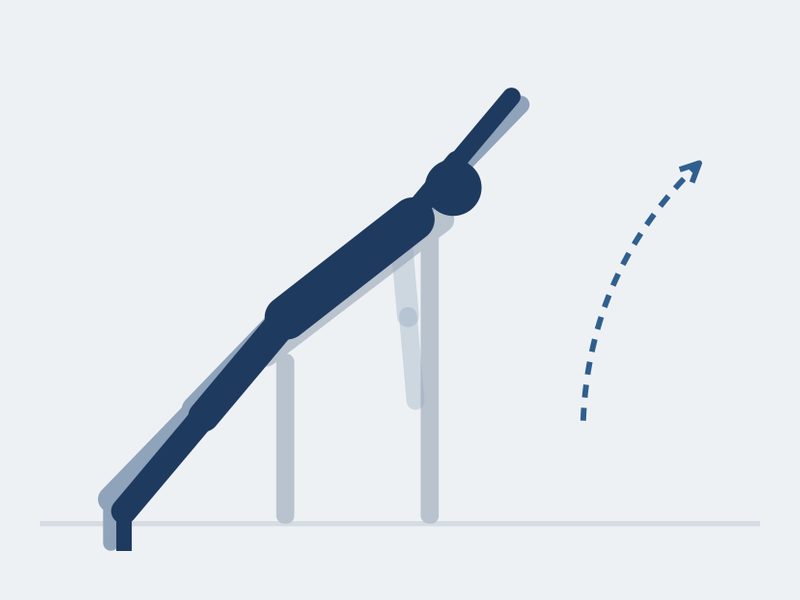
| Push-up plus | Serratus anterior, which keeps the shoulder blade on the ribcage |
| Cross-body stretch | Back-of-shoulder flexibility |
The 6-week plan
Twice a week as a session, or split over three warm-ups a week like the handball programme.
| Weeks | Exercises |
|---|---|
| 1–2 | External rotation 2 × 12–15 · Internal rotation 2 × 12–15 · Pull-apart 2 × 12 · Wall slide 2 × 8 · Push-up plus on a bench 2 × 6–8 · Cross-body stretch 2 × 30 s |
| 3–4 | External rotation 3 × 15 · 90/90 rotation 3 × 12, light band · Prone Y raise 3 × 10 · Pull-apart 3 × 15 · Push-up plus 3 × 8–10 · Cross-body stretch 2 × 30 s |
| 5–6 | 90/90 rotation 3 × 12–15, firmer band · Side-lying external rotation 3 × 15 · Prone Y 3 × 12 with 0.5–1 kg · Wall slide 3 × 12 · Push-up plus 3 × 12–15 |
Keep the band light enough to finish every set with clean form. Shoulders should stay down, away from your ears. Over 40 or sore? Stay in weeks 1 to 2 longer and work in a pain-free range.
Make it a habit
The handball programme worked partly because it lived in the warm-up, so nobody skipped it. Do the first four exercises before you play, three times a week, and the rest on gym days. Our 10-minute shoulder routine is a ready-made warm-up version.
Build all eight as a free PDF in our workout builder with the "Shoulder care" quick-start set.
Already sore?
nidirect's NHS advice for shoulder pain is to stay active and keep the shoulder moving, do shoulder exercises for six to eight weeks to stop pain returning, and avoid inventing your own strenuous exercises or using heavy gym equipment while it's sore. Read can I play padel with shoulder pain? before you load it.
Frequently asked questions
What are the best shoulder exercises for padel?
Band external and internal rotation, 90/90 external rotation, prone Y raises, band pull-aparts, wall slides and push-up plus.
How often should I do shoulder exercises for padel?
Two or three times a week. A handball trial found a programme three times a week in the warm-up cut the odds of shoulder problems by 28%.
Do I need weights for padel shoulder exercises?
No. A light resistance band covers almost everything. Light dumbbells help for side-lying rotations and Y raises later on.
Can shoulder exercises prevent padel shoulder pain?
They help. The best evidence comes from handball, another overhead sport, where a short shoulder programme reduced shoulder problems.
Should shoulder exercises hurt?
No sharp pain. Work in a pain-free range with a light band and progress slowly.
Sources
- Andersson et al. (2017): preventing overuse shoulder injuries, cluster-randomised trial in 660 elite handball players (BJSM)
- Ekstrom, Donatelli and Soderberg (2003): EMG analysis of exercises for the trapezius and serratus anterior (JOSPT)
- Ludewig et al. (2004): serratus anterior and upper trapezius activity during push-up exercises (Am J Sports Med)
- Eirale and de Gasperis (2023): Injuries in padel, Aspetar Sports Medicine Journal
- nidirect (NHS Northern Ireland): shoulder pain